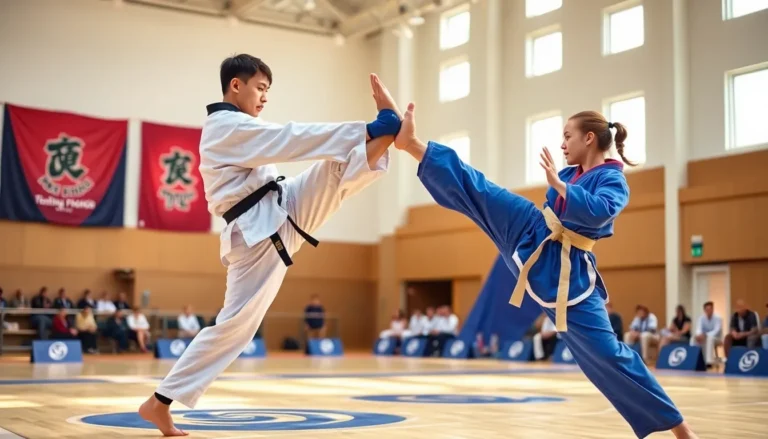

In the bustling world of AI chatbots, ChatGPT reigns supreme, but it’s not the only player in the game. Picture a crowded arena where digital wizards and clever algorithms duke it out for the title of “Best Conversationalist.” From established tech giants to ambitious startups, a variety of contenders are eager to challenge ChatGPT’s throne.
Overview of ChatGPT
ChatGPT stands as a prominent AI-driven conversational agent, developed by OpenAI. Recognized for its ability to generate human-like text, it combines advanced natural language processing techniques with vast datasets to engage users effectively.
Launched in November 2022, ChatGPT quickly attracted significant attention and usage across diverse industries. Businesses leverage its capabilities for customer support, content creation, and personalized interactions, among other applications.
Numerous features enhance its efficiency. ChatGPT adapts its responses based on user prompts and maintains context throughout conversations. This adaptability allows for smoother interactions and more relevant answers, making it a valuable tool for various sectors.
Developers continuously update ChatGPT, improving its performance and expanding its knowledge base. As a result, users benefit from its evolving capabilities, which align with the latest developments in technology and user preferences.
Compared to its competitors, ChatGPT offers unique advantages. Key competitors include Google’s Bard, Anthropic’s Claude, and Microsoft’s integration of AI into products like Bing and Office. Each contender aims to challenge ChatGPT by enhancing conversational depth and contextual awareness.
In the competitive landscape of AI chatbots, ChatGPT remains at the forefront. Its robust performance and ongoing advancements keep it relevant in a rapidly changing environment, as businesses and consumers seek increasingly sophisticated conversational experiences.
Major Competitors in AI Chatbot Space

The competitive landscape features several notable contenders in the AI chatbot market. Each aims to provide innovative solutions to challenge ChatGPT’s leading position.
OpenAI’s Alternatives
OpenAI offers various models alongside ChatGPT, including fine-tuned iterations for specialized tasks. These alternatives cater to different industries such as education and healthcare, enhancing performance in specific applications. Advanced features like integration with other tools further enrich user experiences. Continuous improvement in these alternatives keeps them competitive.
Google Bard
Google Bard emerged as a prominent challenger, leveraging Google’s extensive search capabilities. Users benefit from Bard’s ability to provide real-time information and contextually relevant responses. Integration with services like Google Search enhances its functionality, making it a preferred choice for many. User engagement remains high as Bard evolves, driven by updates that refine its conversational skills.
Microsoft’s AI Solutions
Microsoft has developed a suite of AI solutions, including its own chatbot powered by Azure. Deep integration with Microsoft products enables seamless interaction across platforms like Word and Outlook. Users appreciate its ability to assist with productivity tasks, such as drafting emails and summarizing documents. Continuous enhancements make Microsoft’s chatbot a strong contender in the AI landscape, appealing to businesses and consumers alike.
Niche Competitors
Several niche competitors offer unique features tailored for specific use cases, positioning themselves as viable alternatives to ChatGPT.
Replika
Replika serves as a personal AI companion, focusing on fostering emotional connections. Users engage in conversations that simulate friendship, allowing for more personalized interactions. Designed for mental health support, Replika encourages users to express feelings and thoughts. The platform offers customizable avatars, enabling users to create a persona that resonates with them. With a user-friendly interface, Replika adapts to preferences and evolves through continuous interaction. This unique approach differentiates Replika from traditional chatbots, providing a more intimate experience.
Rasa
Rasa emphasizes building custom chatbots for businesses, focusing on conversational AI. Developers define specific intents and entities through Rasa’s open-source framework, enabling tailored experiences. This platform excels in natural language understanding, allowing companies to create conversational agents that meet unique requirements. Rasa’s flexibility supports various integrations across different platforms, making it appealing for businesses. The active community around Rasa contributes to its continuous improvement, ensuring that it remains an effective tool in the rapidly evolving AI landscape. Businesses leverage Rasa to deliver enhanced customer experiences while maintaining control over their conversational AI strategies.
Emerging Players
Several new entrants are reshaping the AI chatbot landscape. These emerging players aim to carve out their niches alongside established giants like ChatGPT.
Anthropic
Anthropic focuses on developing AI systems that prioritize safety and usability. Their flagship product, Claude, showcases advanced reasoning capabilities and emphasizes ethical AI use. This commitment to responsible AI design helps Claude stand out among competitors, making it appealing for industries that require reliable and transparent interaction. Continuous updates enhance the model’s performance, ensuring it remains competitive in tailoring responses to user needs.
Cohere
Cohere targets enterprises with its powerful language models designed for large-scale applications. Businesses leverage Cohere’s AI for tasks such as content generation, summarization, and semantic search. Its user-friendly API facilitates smooth integration into existing workflows, attracting organizations that want efficient conversational AI solutions. With a focus on customization, Cohere supports unique business requirements, positioning itself as a valuable alternative in the growing AI landscape.
The competitive landscape surrounding ChatGPT is dynamic and evolving. As various players strive to innovate and capture market share, each brings unique strengths and features to the table. From established giants like Google and Microsoft to niche competitors like Replika and Rasa, the diversity in offerings ensures users have a range of options tailored to their specific needs.
Emerging companies continue to push boundaries by focusing on safety, usability, and specialized applications. This ongoing competition not only drives advancements in AI technology but also enhances the overall user experience. With the rapid pace of development, the future of AI chatbots promises exciting possibilities for both users and developers alike.